
jerusalem artichoke recipe

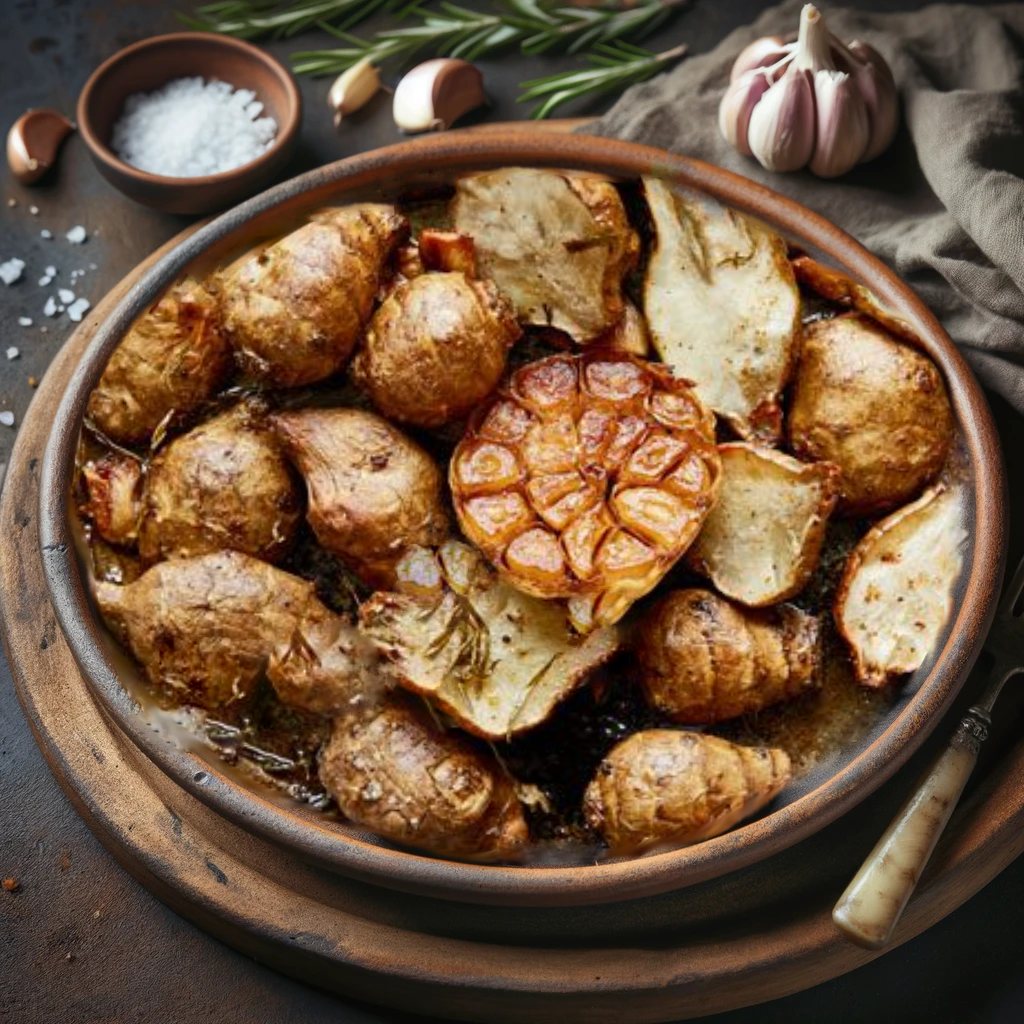
The Best jerusalem artichoke recipe
What I really appreciate about Jerusalem artichokes is how versatile they are. We eat them as a side dish with roasted chicken or fish, but they’re also great tossed into salads or even mashed like potatoes if you’re feeling fancy. They’re perfect for weeknight dinners because they cook quickly, but they also hold up well if you’re making a big meal for friends or family. Plus, they’re packed with inulin, a type of fiber that’s great for gut health, so I feel good about serving them to my kids. They don’t even realize they’re eating something that’s actually good for them—which, let’s be honest, is always a win in my book.

Creamy Roasted Jerusalem Artichoke Soup
A velvety, nutty soup made from roasted Jerusalem artichokes, also known as sunchokes. This comforting dish is rich in flavor and perfect for chilly days, with a touch of cream and fresh herbs for a luxurious finish.
🥘Ingredients
- 1.5 lbs (700g) Jerusalem artichokes (sunchokes), scrubbed and chopped
- 2 tbsp olive oil
- 1 large onion, diced
- 2 cloves garlic, minced
- 2 medium potatoes, peeled and diced
- 4 cups vegetable or chicken stock
- 1/2 cup heavy cream (or coconut cream for dairy-free)
- 1 tsp salt, or to taste
- 1/2 tsp black pepper
- 1/2 tsp nutmeg (optional)
- 2 tbsp fresh chives, chopped
- 1 tbsp fresh parsley, chopped
- 1/4 cup crème fraîche or sour cream
- 1 tbsp toasted pumpkin seeds (optional)
👨🍳Directions
-
1
Preheat your oven to 400°F (200°C). Toss the chopped Jerusalem artichokes with 1 tbsp olive oil, salt, and pepper. Spread them on a baking sheet and roast for 25-30 minutes until tender and golden. -
2
While the artichokes roast, heat the remaining 1 tbsp olive oil in a large pot over medium heat. Add the diced onion and cook for 5 minutes until softened. Add the garlic and cook for another minute until fragrant. -
3
Add the diced potatoes and stock to the pot. Bring to a boil, then reduce heat and simmer for 15 minutes until the potatoes are tender. -
4
Once the Jerusalem artichokes are roasted, add them to the pot along with the nutmeg (if using). Simmer for another 5 minutes. -
5
Use an immersion blender to puree the soup until smooth. Alternatively, transfer the soup in batches to a blender, blend until smooth, and return to the pot. -
6
Stir in the heavy cream and adjust seasoning with salt and pepper. Heat the soup gently for another 2-3 minutes, but do not boil. -
7
Ladle the soup into bowls and garnish with crème fraîche, fresh chives, parsley, and toasted pumpkin seeds (if using). Serve warm.
🔧Equipment
- Baking sheet
- Large pot or Dutch oven
- Blender or immersion blender
- Chef’s knife
- Cutting board
- Wooden spoon
📊Nutrition Facts (per serving)
📝Notes
Watch Video Of How Creamy Roasted Jerusalem Artichoke Soup Works
❓ Frequently Asked Questions About Creamy Roasted Jerusalem Artichoke Soup
1. What is a Jerusalem artichoke, and how does it taste?
Jerusalem artichoke, also known as sunchoke, is a root vegetable from the sunflower family. Despite its name, it’s not related to artichokes and doesn’t come from Jerusalem—it’s native to North America. The tuber has a nutty, slightly sweet, and earthy flavor with a crisp texture when raw and a creamy, potato-like consistency when cooked. Some compare its taste to a cross between an artichoke heart and a water chestnut.
—
2. Can I eat Jerusalem artichokes raw, or do they need to be cooked?
Yes, you can eat Jerusalem artichokes raw! They’re delicious thinly sliced or grated in salads, adding a crunchy texture and mild sweetness. However, cooking them (roasting, boiling, sautéing, or mashing) brings out their natural creaminess and enhances their flavor. If you have a sensitive digestive system, cooking them may help reduce their high inulin content, which can cause gas in some people.
—
3. How do I prevent Jerusalem artichokes from turning brown after cutting?
Like potatoes and apples, Jerusalem artichokes oxidize when exposed to air, turning brown. To prevent this, submerge cut pieces in cold water with a splash of lemon juice or vinegar until you’re ready to cook them. Alternatively, you can blanch them briefly in boiling water before using them in recipes. If roasting or sautéing, toss them in a little acid (lemon juice or vinegar) right after cutting to slow down browning.
—
4. Why do Jerusalem artichokes cause gas, and how can I minimize it?
Jerusalem artichokes are high in inulin, a type of soluble fiber that acts as a prebiotic, feeding gut bacteria. While great for gut health, inulin can cause bloating and gas in some people, especially if eaten in large quantities. To minimize discomfort:
– Start with small portions to let your gut adjust.
– Cook them thoroughly (boiling, roasting, or steaming) to break down some of the inulin.
– Soak sliced tubers in water for a few hours before cooking to leach out some of the inulin.
– Pair them with digestive aids like ginger, fennel, or cumin in recipes.
—
5. What are the best substitutes for Jerusalem artichokes in recipes?
If you can’t find Jerusalem artichokes or want to avoid their digestive effects, try these substitutes based on the recipe:
– For texture (creamy/soft): Potatoes, parsnips, or celeriac (celery root) work well in soups, mashes, or roasted dishes.
– For crunch (raw): Jicama or water chestnuts mimic the crispness in salads.
– For flavor (nutty/sweet): Salsify or burdock root have a similar earthy taste, though they’re less common.
– For inulin content (prebiotic effect): Chicory root or dandelion greens can provide similar gut-health benefits.