sourdough donut recipe

The Best sourdough donut recipe
What I love most about this recipe is how versatile it is. You can keep it simple with a light dusting of cinnamon sugar, or go all out with a rich glaze or even a fruity jam filling. My kids always fight over who gets the first one, and honestly, I don’t blame them. The sourdough starter gives these donuts a subtle complexity that store-bought versions just can’t match, and because they’re fermented, they’re easier to digest than traditional fried donuts. Plus, they’re a great way to use up extra starter if you’re already baking bread regularly. Whether you’re feeding a crowd or just treating yourself, these donuts hit the spot every time.
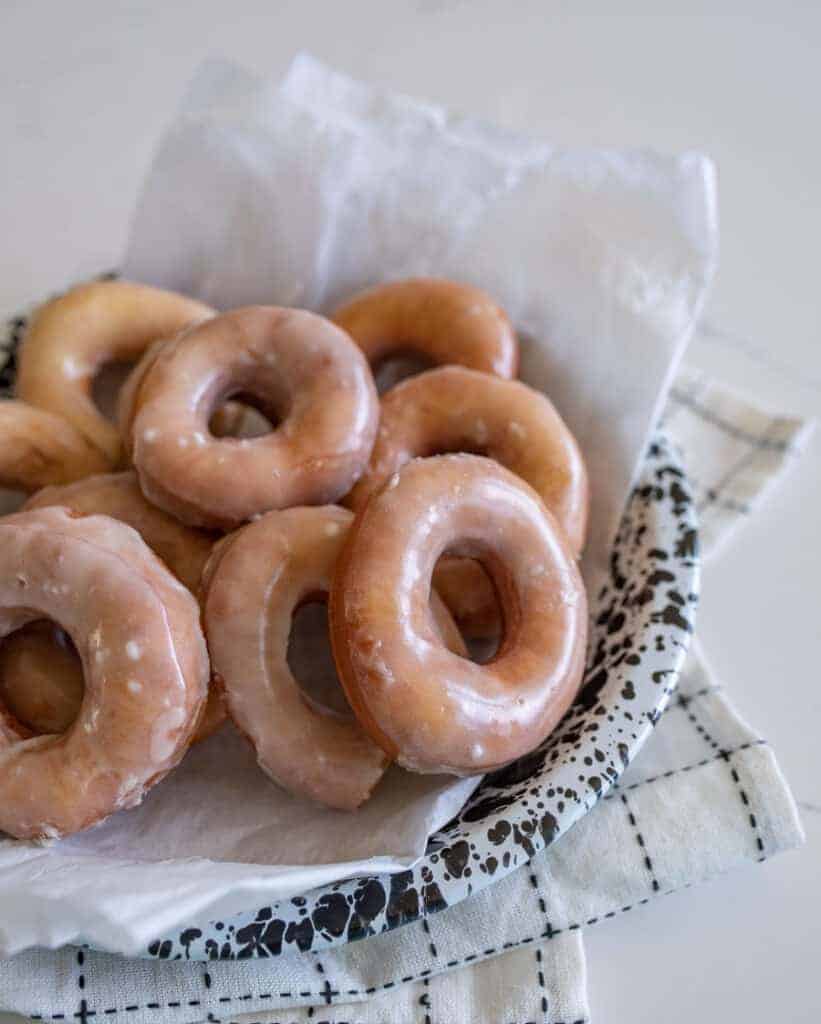
Sourdough Donuts with Vanilla Glaze
These artisanal sourdough donuts are light, airy, and slightly tangy, with a sweet vanilla glaze. Perfect for breakfast or a decadent treat, they require a bit of patience but deliver incredible flavor and texture.
🥘Ingredients
- 1 cup (240g) active sourdough starter (100% hydration)
- 1 cup (240ml) whole milk, warmed
- 3 1/2 cups (420g) all-purpose flour, plus extra for dusting
- 1/4 cup (50g) granulated sugar
- 1 large egg, room temperature
- 4 tbsp (57g) unsalted butter, softened
- 1 tsp salt
- 1/2 tsp ground nutmeg (optional)
- 4 cups (950ml) neutral oil (e.g., vegetable or canola), for frying
- 2 cups (240g) powdered sugar
- 1/4 cup (60ml) whole milk or heavy cream
- 2 tsp vanilla extract
- Pinch of salt
👨🍳Directions
-
1
In a large bowl or stand mixer, combine the sourdough starter, warmed milk, sugar, egg, and softened butter. Mix until well combined. -
2
Add the flour, salt, and nutmeg (if using). Mix with a dough hook or wooden spoon until a shaggy dough forms. Let the dough rest for 20 minutes. -
3
Knead the dough on medium speed (or by hand) for 5-7 minutes until smooth and elastic. The dough should be slightly tacky but not sticky. Add a little more flour if needed. -
4
Place the dough in a lightly greased bowl, cover with plastic wrap or a damp towel, and let it ferment at room temperature for 8-12 hours, or until doubled in size. For a more pronounced sourdough flavor, refrigerate the dough for up to 18 hours after the initial fermentation. -
5
Once fermented, turn the dough out onto a lightly floured surface. Roll it out to about 1/2-inch thickness. Use a donut cutter (or two round cutters) to cut out donuts and donut holes. Place them on a parchment-lined baking sheet, cover, and let them rest for 30-60 minutes while you heat the oil. -
6
Heat the oil in a deep fryer or heavy-bottomed pot to 350°F (175°C). Fry the donuts in batches for 1-2 minutes per side, or until golden brown. Use a slotted spoon or spider to transfer them to a wire rack to drain excess oil. -
7
While the donuts are still warm, prepare the glaze. Whisk together the powdered sugar, milk, vanilla extract, and salt until smooth. Adjust the consistency with more milk (for thinner glaze) or powdered sugar (for thicker glaze). -
8
Dip the top of each donut into the glaze, letting the excess drip off. Place them back on the wire rack to set for 10-15 minutes. Serve warm or at room temperature.
🔧Equipment
- Large mixing bowl
- Stand mixer with dough hook (or wooden spoon)
- Plastic wrap or damp towel
- Rolling pin
- Donut cutter (or two round cutters: 3-inch and 1-inch)
- Deep fryer or heavy-bottomed pot
- Slotted spoon or spider
- Wire rack
- Parchment paper
- Pastry brush (optional)
📊Nutrition Facts (per serving)
📝Notes
Watch Video Of How Sourdough Donuts with Vanilla Glaze Works
❓ Frequently Asked Questions About Sourdough Donuts with Vanilla Glaze
1. Why did my sourdough donuts turn out dense instead of light and fluffy?
Dense sourdough donuts can happen for a few reasons. Overproofing the dough (letting it rise too long) can weaken the gluten structure, while underproofing may not allow enough gas to develop. Additionally, using too much starter or not enough leavening power (like baking powder in some recipes) can weigh down the texture. Make sure your starter is active and bubbly, and follow proofing times closely—sourdough donuts often need a shorter rise than bread.
2. Can I fry sourdough donuts in a different oil than what the recipe calls for?
Yes, you can use other high-smoke-point oils like vegetable, canola, or peanut oil instead of the recommended oil (often sunflower or safflower). Avoid butter or olive oil, as they have lower smoke points and can burn at frying temperatures (350–375°F/175–190°C). Just ensure the oil is fresh and at the correct temperature—too cool, and the donuts will absorb excess oil; too hot, and they’ll burn on the outside before cooking through.
3. How do I know when my sourdough donut dough is properly proofed?
A well-proofed sourdough donut dough should look puffy, slightly jiggly, and have increased in volume by about 50–100%. Press a finger gently into the dough—if it springs back slowly but leaves a slight indentation, it’s ready. If it springs back immediately, it needs more time. If it collapses, it’s overproofed. Since sourdough ferments slower than commercial yeast, proofing can take 2–6 hours at room temperature (or overnight in the fridge for a tangier flavor).
4. Can I bake sourdough donuts instead of frying them?
Yes, but the texture will differ. Baked sourdough donuts tend to be cakier and less tender than fried ones. To adapt the recipe, pipe or shape the dough into a donut pan and bake at 375°F (190°C) for 12–15 minutes, or until golden. Brush with melted butter after baking for extra richness. Keep in mind that sourdough’s natural tang may be more pronounced in baked versions, and the crust won’t be as crispy.
5. How do I store sourdough donuts to keep them fresh?
For short-term storage (1–2 days), keep donuts in an airtight container at room temperature. To retain moisture, add a slice of bread or a paper towel to absorb excess humidity. For longer storage, freeze them: let them cool completely, then place in a freezer bag with parchment between layers. Reheat in a 350°F (175°C) oven for 5–10 minutes or microwave for 10–15 seconds. Avoid refrigerating, as it dries them out. Glazed donuts are best eaten fresh, while unglazed ones freeze better.