
sourdough hamburger bun recipe

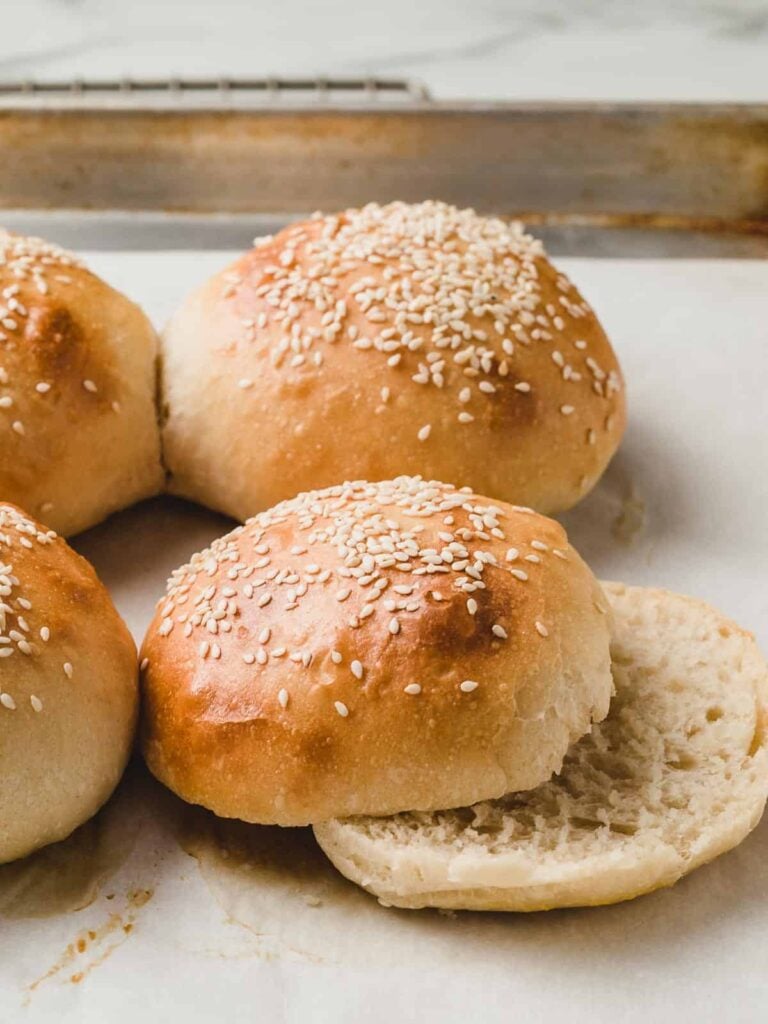
The Best sourdough hamburger bun recipe
What I love most about this recipe is how versatile it is. You can use it for weeknight burgers, pack them for picnics, or even toast them for sandwiches the next day. Plus, since it’s sourdough, it’s easier to digest than regular bread, and the fermentation process adds a nice depth of flavor. It’s one of those recipes that feels fancy but is actually pretty simple once you get the hang of it. And let’s be real—anything that makes my family this happy is a keeper.

Artisan Sourdough Hamburger Buns
These soft, tangy sourdough hamburger buns are perfect for burgers or sandwiches. The natural fermentation adds depth of flavor while keeping the buns light and airy.
🥘Ingredients
- ½ cup (120g) active sourdough starter (100% hydration)
- ½ cup (60g) all-purpose flour
- ¼ cup (60g) water
- 3 ½ cups (420g) bread flour (or all-purpose flour)
- 1 cup (240g) warm water (about 90°F/32°C)
- 2 tbsp (25g) granulated sugar
- 2 tsp (10g) salt
- 2 tbsp (30g) unsalted butter, softened
- 1 large egg (50g), room temperature
- 1 tbsp (15g) olive oil (for bowl)
- 1 large egg
- 1 tbsp (15g) water
- Sesame seeds or poppy seeds (optional, for topping)
👨🍳Directions
-
1
Feed your sourdough starter 4-12 hours before starting. Mix ½ cup starter, ½ cup flour, and ¼ cup water in a jar. Cover and let sit at room temperature until bubbly and doubled (about 4-6 hours). -
2
In a large bowl, combine 1 cup of the fed starter (discard the rest or save for another use), warm water, and sugar. Mix until dissolved. -
3
Add the flour, salt, softened butter, and egg to the bowl. Mix with a wooden spoon or dough hook until a shaggy dough forms (about 2-3 minutes). -
4
Knead the dough by hand for 8-10 minutes or with a stand mixer for 5-6 minutes until smooth and elastic. The dough should be slightly tacky but not sticky. Add a little more flour if needed. -
5
Lightly oil a clean bowl, place the dough inside, and cover with plastic wrap or a damp towel. Let rise at room temperature (70-75°F/21-24°C) for 4-6 hours or until doubled in size. For a slower rise, refrigerate overnight (8-12 hours). -
6
Line a baking sheet with parchment paper. Turn the dough onto a lightly floured surface and divide into 8 equal pieces (about 100g each). Shape each piece into a smooth ball by pulling the edges toward the center and pinching to seal. -
7
Place the buns on the prepared baking sheet, leaving 2 inches between each. Cover loosely with oiled plastic wrap and let rise for 1-2 hours or until puffy and nearly doubled. -
8
Preheat the oven to 375°F (190°C). In a small bowl, whisk the egg and water for the egg wash. Brush the tops of the buns lightly with the wash and sprinkle with sesame or poppy seeds if desired. -
9
Bake for 18-20 minutes or until the buns are golden brown and the internal temperature reaches 190°F (88°C). Rotate the baking sheet halfway through for even baking. -
10
Remove the buns from the oven and let cool on a wire rack for at least 20 minutes before slicing. Serve warm or at room temperature.
🔧Equipment
- Large mixing bowl
- Digital kitchen scale (recommended)
- Stand mixer with dough hook (optional)
- Plastic wrap or damp towel
- Baking sheet
- Parchment paper
- Pastry brush
- Bench scraper (optional)
📊Nutrition Facts (per serving)
📝Notes
Watch Video Of How Artisan Sourdough Hamburger Buns Works
❓ Frequently Asked Questions About Artisan Sourdough Hamburger Buns
1. Can I use all-purpose flour instead of bread flour for sourdough hamburger buns?
Yes, you can substitute all-purpose flour for bread flour in this recipe, but the buns may be slightly less chewy and have a slightly denser texture. Bread flour has a higher protein content, which helps create more gluten and a better rise. If using all-purpose flour, you may need to adjust the hydration slightly (reduce water by 1-2 tablespoons) to prevent the dough from becoming too sticky.
2. How long should I let the dough ferment before shaping the buns?
The fermentation time depends on your kitchen temperature and the strength of your sourdough starter. Typically, bulk fermentation takes 4-6 hours at room temperature (70-75°F / 21-24°C). The dough should nearly double in size and look puffy with visible bubbles. For a slower, more flavorful rise, you can refrigerate the dough for 12-18 hours after the initial 2-hour room-temperature rest.
3. Why did my sourdough hamburger buns turn out dense instead of light and fluffy?
Dense buns can result from several factors:
– Underproofed dough – The dough didn’t ferment long enough before baking.
– Weak starter – Your sourdough starter wasn’t active enough (it should float in water before use).
– Over-kneading – Too much handling can deflate the dough.
– Incorrect oven temperature – Baking at too low a temperature prevents proper oven spring.
– Old or expired ingredients – Check the freshness of your flour and yeast (if using any).
4. Can I make these buns ahead of time, and how should I store them?
Yes! You can make the buns 1-2 days ahead and store them in an airtight container at room temperature. For longer storage, freeze the baked buns for up to 3 months—thaw at room temperature and refresh in a 350°F (175°C) oven for 5-10 minutes before serving. If storing dough, refrigerate it after shaping (before the final proof) and bake within 24 hours for best results.
5. Do I need to score the buns before baking, and what’s the best way to do it?
Scoring isn’t strictly necessary for hamburger buns, but it can help with even rising and a more professional look. If you choose to score, use a sharp razor or lame to make a shallow (¼-inch) cross or single slash on top of each bun just before baking. This prevents uneven cracking and allows steam to escape. For a softer crust, brush the buns with melted butter or egg wash right after scoring.