
einkorn sourdough bread recipe

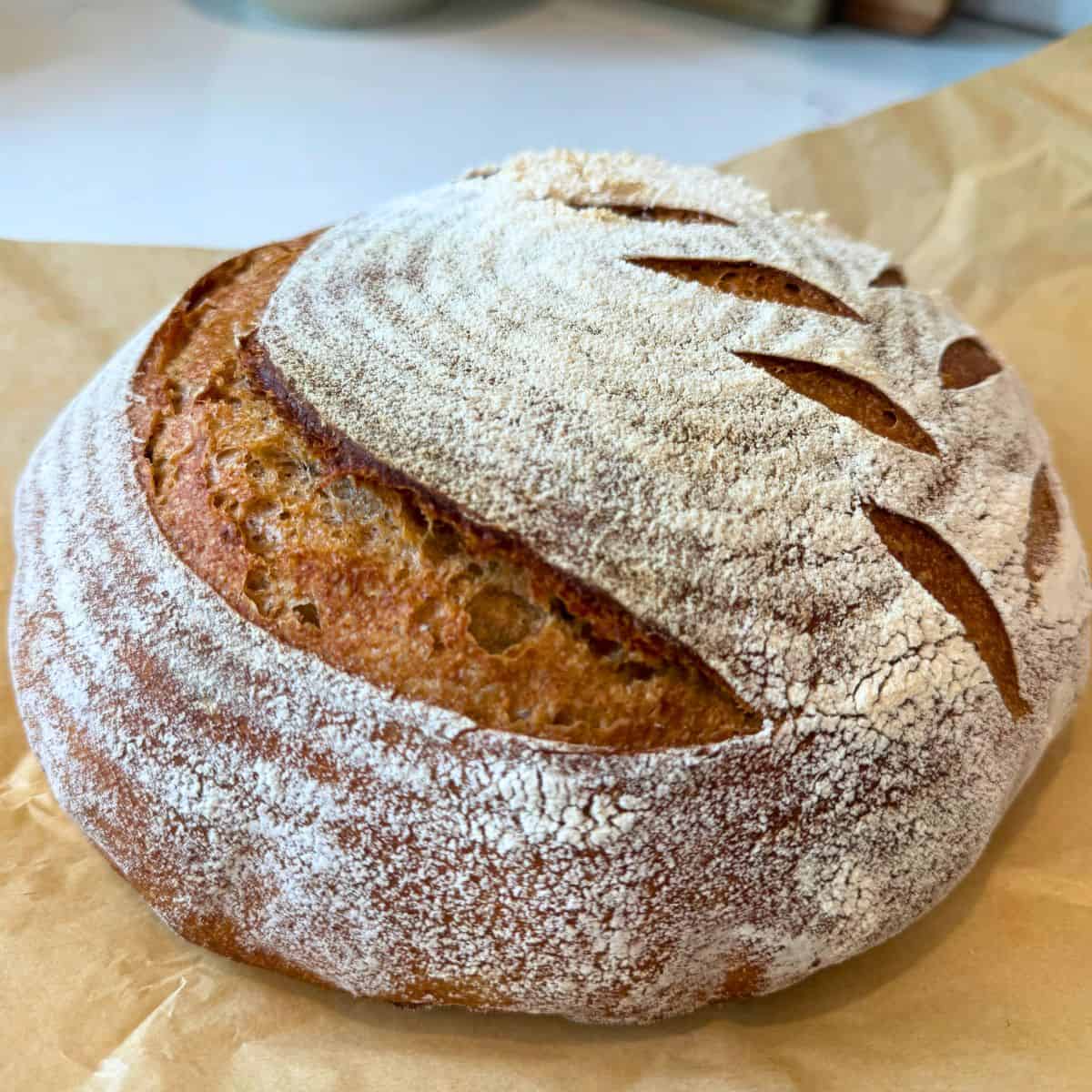
The Best einkorn sourdough bread recipe
What I love most about this recipe is how forgiving einkorn is, even for sourdough beginners. It ferments faster than regular wheat, so you don’t have to wait as long for that perfect rise. Plus, einkorn is one of the oldest grains out there, and it’s packed with nutrients—more protein, antioxidants, and easier-to-digest gluten than modern wheat. My husband, who usually avoids bread, doesn’t even hesitate when it’s this one. It’s become a staple in our house, and I’m always happy to share the recipe because it’s just that good.
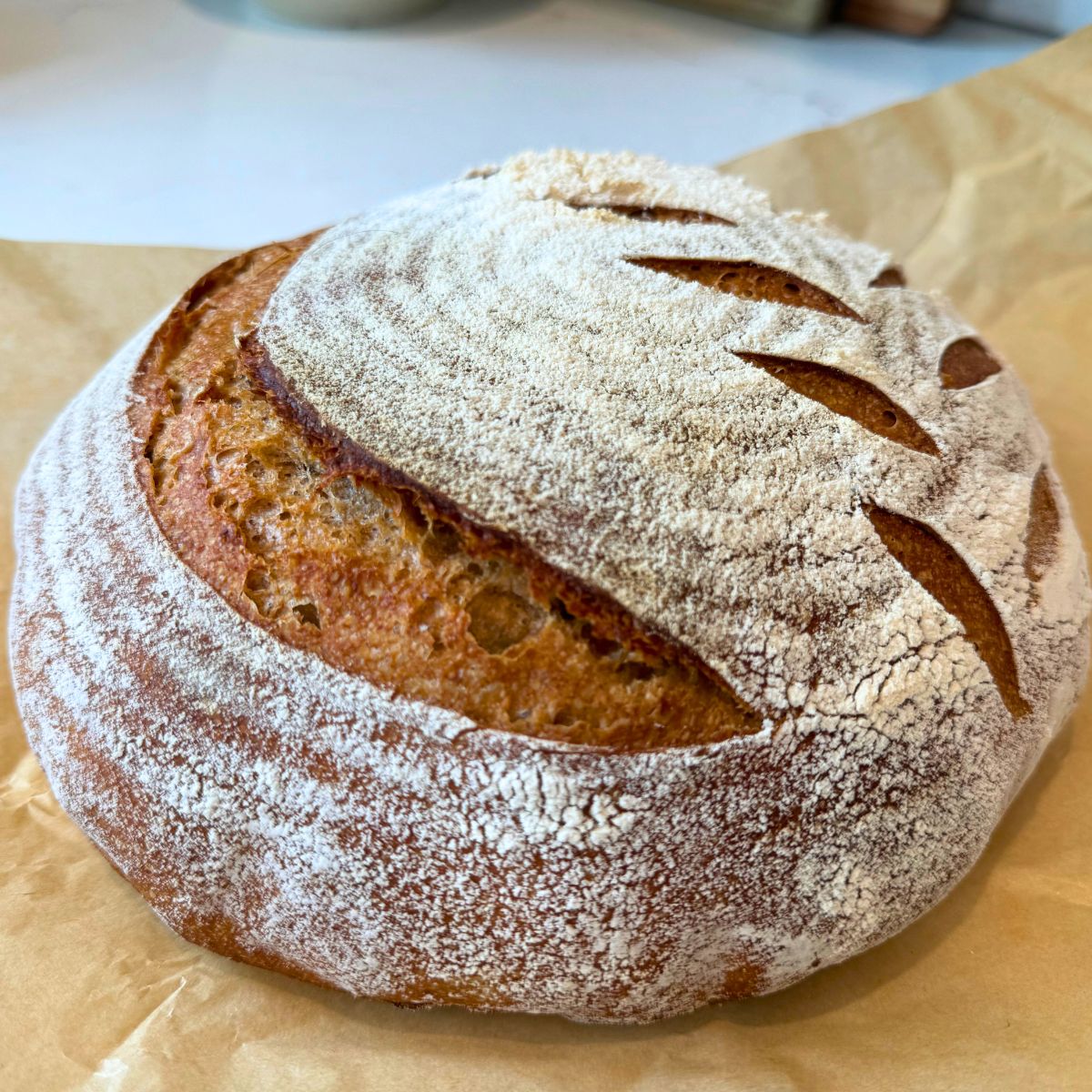
Einkorn Sourdough Bread
A rustic, nutty-flavored sourdough bread made with ancient einkorn flour. This recipe yields a chewy crust and a tender, slightly tangy crumb, perfect for artisanal sandwiches or toast.
🥘Ingredients
- 50g active einkorn sourdough starter (100% hydration)
- 50g einkorn flour
- 50g water
- 500g einkorn flour (whole or sifted)
- 300g water (adjust for hydration preference)
- 10g fine sea salt
- 100g active einkorn sourdough starter (from above)
- Extra einkorn flour for shaping
👨🍳Directions
-
1
Feed your sourdough starter 8-12 hours before mixing the dough. Combine 50g starter, 50g einkorn flour, and 50g water in a jar. Stir well, cover, and let sit at room temperature until bubbly and doubled in size. -
2
In a large bowl, mix 500g einkorn flour and 300g water until no dry bits remain. Cover and let rest (autolyse) for 30-60 minutes. -
3
Add 100g of the active sourdough starter and 10g salt to the dough. Mix thoroughly by hand or with a dough whisk until fully incorporated. -
4
Perform a series of stretch-and-folds every 30 minutes for the first 2 hours. Wet your hands, grab one side of the dough, stretch it upward, and fold it over. Rotate the bowl and repeat 3-4 times per session. -
5
Cover the bowl and let the dough ferment at room temperature (70-75°F) for 8-12 hours, or until it has doubled in size and shows bubbles on the surface. -
6
Turn the dough onto a lightly floured surface. Shape it into a round boule or oval batard by folding the edges toward the center and tightening the surface. -
7
Place the dough seam-side up in a floured banneton or a bowl lined with a floured towel. Cover and refrigerate for 12-18 hours for cold proofing (or proof at room temperature for 1-2 hours if preferred). -
8
Preheat your oven to 475°F (245°C) with a Dutch oven inside for at least 30 minutes. -
9
Turn the dough onto parchment paper. Score the top with a sharp knife or lame in a cross or decorative pattern. -
10
Carefully transfer the dough (with parchment) into the hot Dutch oven. Cover with the lid and bake for 20 minutes. -
11
Remove the lid and bake for another 20-25 minutes, or until the crust is deep golden brown and the internal temperature reaches 205-210°F (96-99°C). -
12
Cool the bread on a wire rack for at least 1 hour before slicing to allow the crumb to set.
🔧Equipment
- Large mixing bowl
- Digital kitchen scale
- Dough scraper
- Banneton or proofing basket (or a bowl lined with a towel)
- Dutch oven or baking stone
- Parchment paper
- Sharp knife or lame
- Cooling rack
📊Nutrition Facts (per serving)
📝Notes
Watch Video Of How Einkorn Sourdough Bread Works
❓ Frequently Asked Questions About Einkorn Sourdough Bread
1. What is einkorn flour, and why is it used in sourdough bread?
Einkorn is an ancient grain and one of the earliest cultivated forms of wheat. It has a lower gluten content compared to modern wheat, resulting in a denser but more nutritious loaf. Einkorn flour is rich in protein, antioxidants, and minerals like lutein, making it a popular choice for those seeking a healthier alternative. Its unique flavor—nutty and slightly sweet—also enhances the taste of sourdough bread.
2. Can I substitute einkorn flour with regular whole wheat or all-purpose flour?
Yes, you can substitute einkorn flour with whole wheat or all-purpose flour, but the texture and flavor will differ. Einkorn has less gluten, so the dough may be stickier and the bread denser. If using all-purpose flour, you may need to adjust hydration (reduce water slightly) since einkorn absorbs liquid differently. For best results, consider blending einkorn with a stronger flour (like bread flour) to improve structure.
3. Why is my einkorn sourdough dough so sticky and hard to handle?
Einkorn dough tends to be stickier because of its lower gluten content and higher starch levels. To manage this, wet your hands and tools (like a dough scraper) when handling the dough, and avoid adding extra flour unless absolutely necessary. A longer autolyse (resting period) before kneading can also help improve dough strength. If the dough remains too sticky, try reducing hydration slightly in future batches.
4. How long should I ferment einkorn sourdough bread, and what signs should I look for?
Einkorn sourdough ferments faster than modern wheat due to its simpler gluten structure. Bulk fermentation typically takes 4–8 hours at room temperature (70–75°F / 21–24°C), depending on your starter’s strength. Look for these signs:
– Volume increase (dough should rise by 30–50%).
– Bubbles on the surface and sides of the dough.
– Jiggly texture when shaken gently.
Over-fermenting can lead to a dense or sour loaf, so monitor closely.
5. My einkorn sourdough bread turned out dense. What went wrong?
Several factors can cause dense einkorn sourdough:
– Underproofing or overproofing: Einkorn dough rises quickly, so timing is critical. If underproofed, the bread won’t expand; if overproofed, it collapses.
– Weak starter: Ensure your starter is active and doubles in size within 4–6 hours of feeding.
– Low gluten development: Einkorn lacks strong gluten, so gentle folds (instead of aggressive kneading) help build structure.
– Incorrect hydration: Too much water weakens the dough; too little makes it stiff. Adjust based on flour absorption.
– Baking issues: Use a Dutch oven for steam, and bake at the right temperature (usually 450°F / 230°C) to ensure proper oven spring.