filipino pork ribs recipe

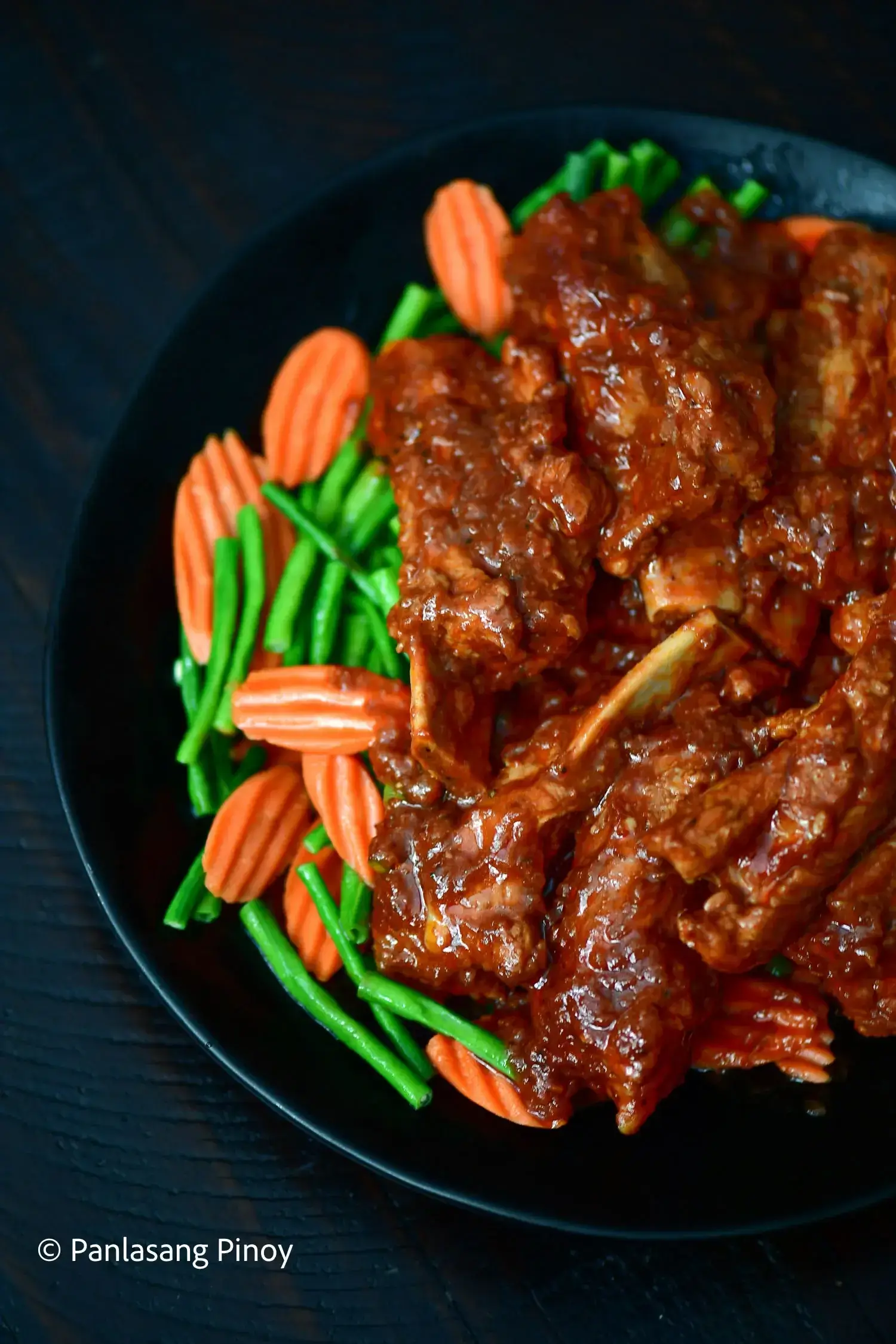
- The Best filipino pork ribs recipe
- Filipino Sweet and Spicy Pork Ribs (Ribs Adobo)
- 🥘Ingredients
- 👨🍳Directions
- 🔧Equipment
- 📊Nutrition Facts (per serving)
- 📝Notes
- Watch Video Of How Filipino Sweet and Spicy Pork Ribs (Ribs Adobo) Works
- ❓ Frequently Asked Questions About Filipino Sweet and Spicy Pork Ribs (Ribs Adobo)
The Best filipino pork ribs recipe
What I love most about this recipe is how balanced it is. The ribs are tender and flavorful, but the sauce isn’t overly heavy or greasy. The mix of soy sauce, vinegar, and a touch of sugar gives it that classic Filipino adobo flavor without being too rich. Plus, pork ribs are a great source of protein and iron, so it’s a meal you can feel good about serving. It’s one of those dishes that’s hearty enough for a weeknight but still feels like a treat. If you haven’t tried making it yet, you’re missing out—it’s a staple in our house for a reason.
Filipino Sweet and Spicy Pork Ribs (Ribs Adobo)
A Filipino-inspired twist on pork ribs, marinated in a sweet and tangy adobo-style sauce with a kick of spice. These ribs are tender, flavorful, and perfect for any gathering or family meal.
🥘Ingredients
- 2 lbs pork ribs (baby back or spare ribs), cut into individual ribs
- 1/2 cup soy sauce
- 1/2 cup vinegar (cane or white)
- 1/4 cup brown sugar
- 1 head garlic, minced (about 8 cloves)
- 1 tbsp black peppercorns, crushed
- 3 bay leaves
- 1 tbsp chili flakes (adjust to taste)
- 1 cup pineapple juice (optional, for sweetness)
- 2 tbsp honey or brown sugar
- 1 tbsp oyster sauce
- 1 tbsp calamansi or lemon juice
- 1 tsp cornstarch mixed with 1 tbsp water (slurry)
👨🍳Directions
-
1
In a large bowl or resealable bag, combine soy sauce, vinegar, brown sugar, minced garlic, crushed peppercorns, bay leaves, chili flakes, and pineapple juice (if using). Mix well. -
2
Add the pork ribs to the marinade, ensuring they are fully coated. Marinate for at least 30 minutes, or refrigerate overnight for deeper flavor. -
3
Transfer the ribs and marinade to a large pot or Dutch oven. Bring to a boil over medium-high heat, then reduce heat to low. Simmer uncovered for 45-50 minutes, turning the ribs occasionally, until the sauce has thickened and the ribs are tender. -
4
Preheat the oven to 375°F (190°C) if finishing the ribs in the oven. Alternatively, you can grill them for a smoky flavor. -
5
Remove the ribs from the pot and place them on a baking sheet lined with parchment paper. Reserve the marinade for the glaze. -
6
In a small saucepan, combine the reserved marinade, honey, oyster sauce, and calamansi juice. Bring to a simmer over medium heat. Stir in the cornstarch slurry and cook for 2-3 minutes until the glaze thickens. -
7
Brush the glaze generously over the ribs. Bake for 15-20 minutes, flipping and basting halfway through, until the ribs are caramelized and slightly charred. For grilling, cook over medium heat for 10-12 minutes, basting frequently. -
8
Let the ribs rest for 5 minutes before serving. Garnish with sliced calamansi or chopped green onions if desired.
🔧Equipment
- Large mixing bowl or resealable bag
- Large pot or Dutch oven
- Tongs
- Baking sheet (if baking)
- Small saucepan (for glaze)
- Measuring cups and spoons
📊Nutrition Facts (per serving)
📝Notes
Watch Video Of How Filipino Sweet and Spicy Pork Ribs (Ribs Adobo) Works
❓ Frequently Asked Questions About Filipino Sweet and Spicy Pork Ribs (Ribs Adobo)
1. What cut of pork ribs is best for Filipino-style pork ribs?
The best cut for Filipino pork ribs (like Baby Back Ribs or Spare Ribs) is pork spare ribs (kasim or tadyang in Tagalog). They have more fat and connective tissue, making them tender and flavorful when slow-cooked. Baby back ribs are leaner and cook faster but can dry out if overcooked. For dishes like sinigang or adobo ribs, spare ribs are ideal.
2. How do I make Filipino pork ribs tender?
To achieve fall-off-the-bone tenderness:
– Marinate the ribs for at least 4 hours (or overnight) in a mix of soy sauce, calamansi/lemon juice, garlic, and spices.
– Slow-cook them—either by braising (simmering in liquid for 1.5–2 hours), pressure cooking (30–40 minutes), or oven-baking at 300°F (150°C) for 2–3 hours.
– Add acidity (vinegar, calamansi, or pineapple juice) to break down tough fibers.
– Don’t overcook—test tenderness with a fork; ribs should pull apart easily but not be mushy.
3. Can I use a substitute for banana ketchup in Filipino pork ribs?
Yes! If banana ketchup isn’t available, try these substitutes:
– Regular tomato ketchup (less sweet, so add a pinch of sugar or honey).
– Sweet chili sauce (for a tangy-spicy twist).
– Pineapple juice + soy sauce (for a fruity, savory glaze).
– BBQ sauce (mix with a little vinegar to balance sweetness).
For authentic flavor, banana ketchup is best, but these work in a pinch.
4. What’s the difference between Filipino adobo ribs and sinigang ribs?
The key differences lie in the cooking method and flavor profile:
– Adobo Ribs:
– Flavor: Savory, tangy, and slightly sweet (soy sauce, vinegar, garlic, bay leaves, peppercorns).
– Texture: Tender with a sticky, caramelized glaze (often reduced after braising).
– Serving: Best with steamed rice; sauce is thick and rich.
– Sinigang Ribs:
– Flavor: Sour and light (tamarind, calamansi, or guava broth with veggies like kangkong, radish, and eggplant).
– Texture: Fall-off-the-bone tender, served in a thin, tangy soup.
– Serving: A comforting soup, often paired with patis (fish sauce) and chili.
5. How do I store and reheat leftover Filipino pork ribs?
Storage:
– Fridge: Cool ribs completely, then store in an airtight container for 3–4 days.
– Freezer: Wrap tightly in foil or use a freezer bag (up to 3 months).
Reheating:
– Stovetop: Simmer in a little water, broth, or sauce (covered) for 10–15 minutes on low heat.
– Oven: Cover with foil and bake at 300°F (150°C) for 15–20 minutes.
– Microwave: Use a microwave-safe dish with a splash of water, covered, for 2–3 minutes (check for even heating).
– Air Fryer: 350°F (175°C) for 5–7 minutes (great for crisping up adobo ribs).
Tip: For sinigang ribs, reheat the broth separately to avoid overcooking the veggies.