
water challah recipe

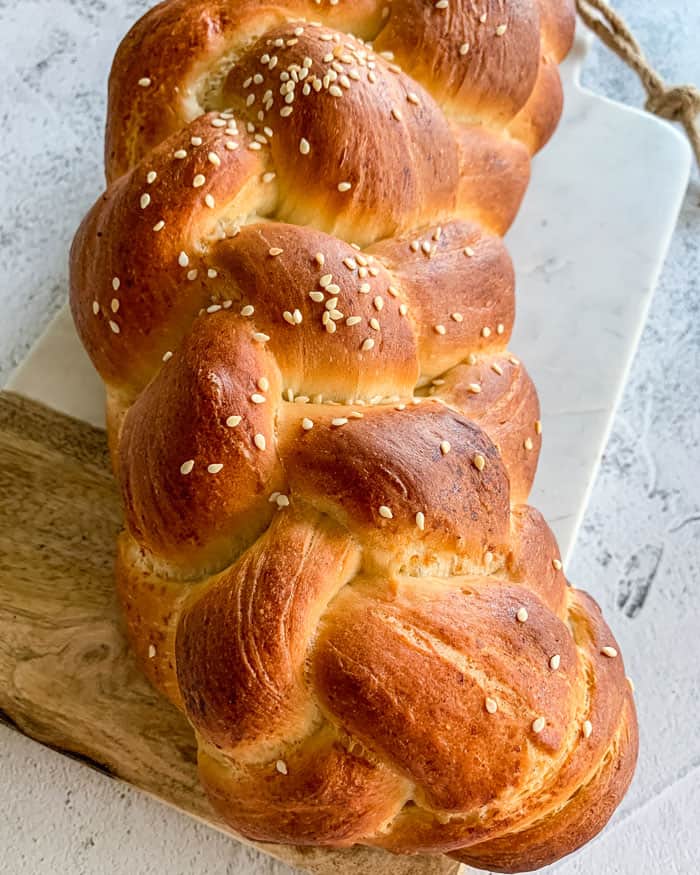
The Best water challah recipe
What I love most about this recipe is how versatile it is. Unlike some challahs that rely on eggs for richness, this version uses water as the base, making it lighter but still incredibly flavorful. It’s a great option if you’re watching cholesterol or just want a bread that’s a little less heavy. Plus, it keeps well for days, so I often make two loaves at once—one for now and one for later. The dough is forgiving, too, which is a lifesaver when you’re juggling a million things. Whether you’re a seasoned baker or just starting out, this recipe is a winner.
Classic Water Challah
A soft, slightly sweet braided bread traditionally served on Jewish Sabbath and holidays. This water challah is lighter than egg challah but equally delicious, with a tender crumb and golden crust.
🥘Ingredients
- 4 cups (500g) all-purpose flour, plus extra for dusting
- 1/4 cup (50g) granulated sugar
- 1 packet (2 1/4 tsp) active dry yeast
- 1 1/4 cups (300ml) warm water (110°F/43°C)
- 1/3 cup (80ml) neutral oil (like vegetable or canola)
- 1 tsp salt
- 1 tbsp honey (optional, for extra sweetness)
- 1 large egg, beaten (for egg wash)
- 1 tbsp water or milk (for egg wash)
- Poppy seeds or sesame seeds (optional, for sprinkling)
👨🍳Directions
-
1
Activate the yeast: In a small bowl, combine warm water, sugar, and yeast. Let sit for 5-10 minutes until foamy. -
2
Mix the dough: In a large bowl, combine flour and salt. Make a well in the center and pour in the yeast mixture, oil, and honey (if using). Stir with a wooden spoon until a shaggy dough forms. -
3
Knead the dough: Turn the dough onto a lightly floured surface and knead for 8-10 minutes until smooth and elastic. Alternatively, use a stand mixer with a dough hook for 5-6 minutes. -
4
First rise: Place the dough in a lightly oiled bowl, cover with a clean towel or plastic wrap, and let rise in a warm place for 1-1.5 hours, or until doubled in size. -
5
Shape the dough: Punch down the dough to release air. Divide into 6 equal pieces (for 2 braided loaves) and roll each piece into a rope about 12 inches long. Braid the ropes loosely and tuck the ends under. -
6
Second rise: Place the braided loaves on a parchment-lined baking sheet, cover, and let rise for 30-45 minutes until puffy. -
7
Preheat the oven to 375°F (190°C). -
8
Prepare the egg wash: Whisk the egg with 1 tbsp water or milk. Brush the tops of the loaves gently with the egg wash and sprinkle with seeds if desired. -
9
Bake for 25-30 minutes, or until the loaves are golden brown and sound hollow when tapped on the bottom. -
10
Cool: Let the challah cool on a wire rack for at least 30 minutes before slicing.
🔧Equipment
- Large mixing bowl
- Measuring cups and spoons
- Whisk
- Wooden spoon or dough whisk
- Clean kitchen towel or plastic wrap
- Baking sheet
- Parchment paper
- Pastry brush
- Oven
📊Nutrition Facts (per serving)
📝Notes
Watch Video Of How Classic Water Challah Works
❓ Frequently Asked Questions About Water Challah
1. What is water challah, and how is it different from regular challah?
Water challah is a type of challah bread made with water instead of eggs or milk, giving it a lighter, slightly crispier crust and a less rich flavor compared to traditional egg challah. It’s often preferred for those avoiding dairy (for kosher meals) or looking for a simpler, pareve (neutral) version of the bread. The texture is still soft and slightly chewy but less tender than egg-based challah.
2. Can I substitute water with another liquid in this recipe?
Yes, you can substitute water with other liquids like almond milk, soy milk, or even a small amount of honey diluted in water for a slightly sweeter flavor. However, keep in mind that dairy-based liquids (like regular milk) will make the challah non-pareve, and richer liquids may alter the texture, making it denser or softer. For best results, stick to neutral liquids if you want to maintain the classic water challah texture.
3. Why is my water challah dense or not rising properly?
Several factors can cause dense or poorly risen challah:
– Yeast issues: Ensure your yeast is fresh and activated (proof it in warm water with a pinch of sugar first). If the water is too hot, it can kill the yeast.
– Kneading: Under-kneading can prevent gluten development, while over-kneading can make the dough tough. Aim for a smooth, elastic texture.
– Rising time: Let the dough rise in a warm, draft-free place until it doubles in size (about 1–2 hours). Cold temperatures slow fermentation.
– Flour type: Bread flour works best for structure; all-purpose flour may yield a slightly denser loaf.
4. How do I braid water challah for the best results?
Braiding challah can be tricky, but here’s a simple method for a 3-strand braid:
1. Divide the dough into 3 equal parts and roll each into a long rope (about 12–14 inches).
2. Pinch the tops of the ropes together and braid them tightly, tucking the ends under.
3. For a 4- or 6-strand braid, use more ropes and follow a consistent over-under pattern.
4. Let the braided loaf rise again for 30–45 minutes before baking to ensure it puffs up. Brush with egg wash (or water + oil for pareve) for a glossy finish.
5. How should I store water challah, and can I freeze it?
– Short-term storage: Keep challah in a bread box or wrapped in a clean kitchen towel at room temperature for up to 3 days. Avoid plastic bags, as they can make the crust soggy.
– Freezing: Slice the challah before freezing for easy thawing. Wrap tightly in plastic wrap and aluminum foil, then freeze for up to 3 months. Thaw at room temperature or reheat slices in a toaster or oven (350°F/175°C for 5–10 minutes).
– Reviving stale challah: Spritz with water and warm in the oven for a few minutes to restore softness. Stale challah also makes excellent French toast or bread pudding!