
cherry jelly recipe

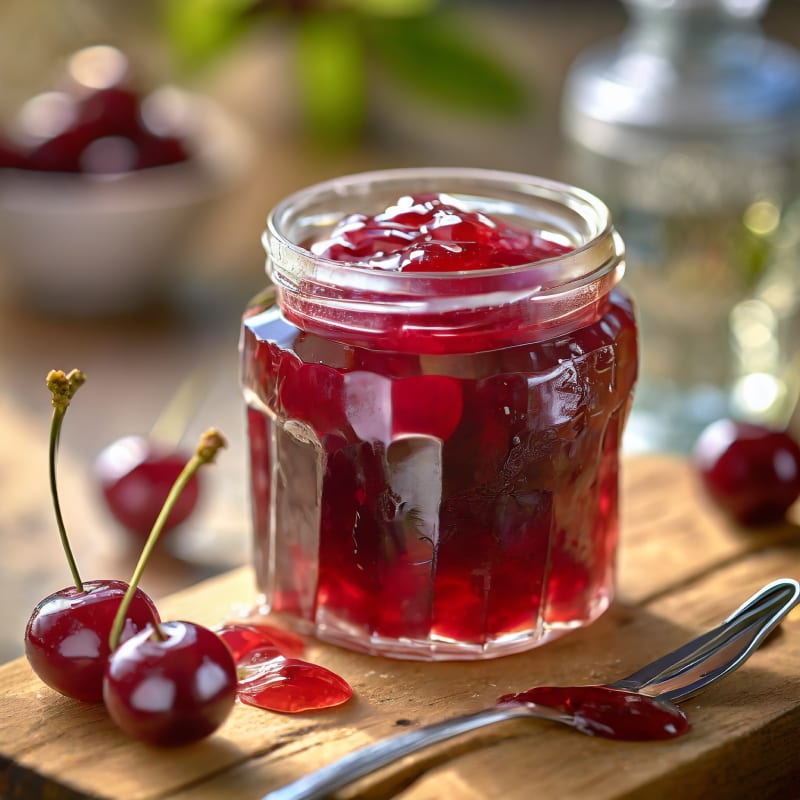
The Best cherry jelly recipe
This jelly is perfect for busy weeknights when you need something fast but still want to feel good about what you’re serving. Cherries are packed with antioxidants and anti-inflammatory benefits, so it’s a great way to sneak in some extra nutrition without anyone complaining. Plus, it’s versatile—spread it on sandwiches, swirl it into oatmeal, or even use it as a glaze for grilled chicken if you’re feeling fancy. It’s one of those recipes that fits seamlessly into everyday life, whether you’re meal prepping for the week or just looking for a quick way to use up fresh cherries before they go bad.

Classic Cherry Jelly
A sweet and tangy homemade cherry jelly that’s perfect for spreading on toast or pairing with cheese. This easy recipe captures the vibrant flavor of fresh cherries in a smooth, glossy jelly.
🥘Ingredients
- 4 cups fresh or frozen pitted cherries (about 2 lbs)
- 1 cup water
- ¼ cup lemon juice (freshly squeezed)
- 1 package (1.75 oz) powdered pectin
- 4 cups granulated sugar
- ½ tsp almond extract (for enhanced flavor)
- 1 cinnamon stick (for spiced jelly)
👨🍳Directions
-
1
Prepare the cherries: If using fresh cherries, wash, stem, and pit them. For frozen cherries, thaw and drain excess liquid. -
2
Cook the cherries: In a large saucepan, combine cherries and water. Bring to a boil over medium-high heat, then reduce heat and simmer for 10 minutes, mashing cherries slightly with a wooden spoon. -
3
Strain the juice: Pour the cherry mixture through a fine-mesh strainer or cheesecloth-lined colander into a bowl. Press gently to extract juice (about 3 cups). Discard solids or save for smoothies. -
4
Combine ingredients: Return the cherry juice to the saucepan. Add lemon juice and pectin, stirring well to dissolve. Bring to a full rolling boil over high heat, stirring constantly. -
5
Add sugar: Stir in sugar all at once. Return to a full rolling boil and boil for exactly 1 minute, stirring constantly to prevent scorching. -
6
Test for doneness: Remove from heat and perform a gel test by placing a small amount of jelly on a chilled plate. If it wrinkles when pushed with a finger, it’s ready. If not, boil for another 30 seconds and retest. -
7
Fill jars: Ladle hot jelly into sterilized jars, leaving ¼-inch headspace. Wipe rims clean with a damp cloth, then seal with lids and bands. -
8
Process jars: Place jars in a water bath canner or large pot with a rack. Ensure jars are covered by 1–2 inches of water. Bring to a boil and process for 10 minutes (adjust for altitude if needed). -
9
Cool and store: Remove jars with a jar lifter and let cool on a towel for 24 hours. Check seals (lids should not flex when pressed). Store unopened jars in a cool, dark place for up to 1 year. Refrigerate after opening.
🔧Equipment
- Large saucepan
- Wooden spoon
- Fine-mesh strainer or cheesecloth
- Canning jars with lids and bands (sterilized)
- Water bath canner or large pot with rack
- Jar lifter
- Ladle
- Measuring cups and spoons
📊Nutrition Facts (per serving)
📝Notes
Watch Video Of How Classic Cherry Jelly Works
❓ Frequently Asked Questions About Cherry Jelly
1. Can I use frozen cherries instead of fresh ones for the jelly?
Yes, you can use frozen cherries! Thaw them first and drain any excess liquid before using. The flavor will still be delicious, though the texture might be slightly softer. If you prefer a firmer jelly, you may need to add a bit more pectin.
2. Why did my cherry jelly turn out too runny?
A runny jelly usually means the pectin didn’t set properly. This could happen if the mixture wasn’t boiled long enough, the pectin wasn’t measured correctly, or the sugar ratio was off. To fix it, you can reheat the jelly and add a bit more pectin, then re-boil and test for doneness.
3. How long does homemade cherry jelly last?
When stored in a sterilized, airtight jar, homemade cherry jelly can last up to 1 year in the pantry. Once opened, keep it in the fridge and use it within 3-4 weeks for the best quality. Always check for mold or off smells before consuming.
4. Can I reduce the sugar in the cherry jelly recipe?
Sugar is important for both flavor and preservation, but you can reduce it slightly if needed. However, too little sugar may prevent the jelly from setting properly. If you want a lower-sugar version, use a low-sugar pectin specifically designed for reduced-sugar recipes.
5. What’s the best way to test if the jelly is done?
The most reliable method is the plate test: Place a small spoonful of jelly on a chilled plate and let it sit for a minute. If it wrinkles when pushed with your finger, it’s ready. Alternatively, use a candy thermometer—the jelly should reach 220°F (105°C).