moist vanilla cake recipe with oil

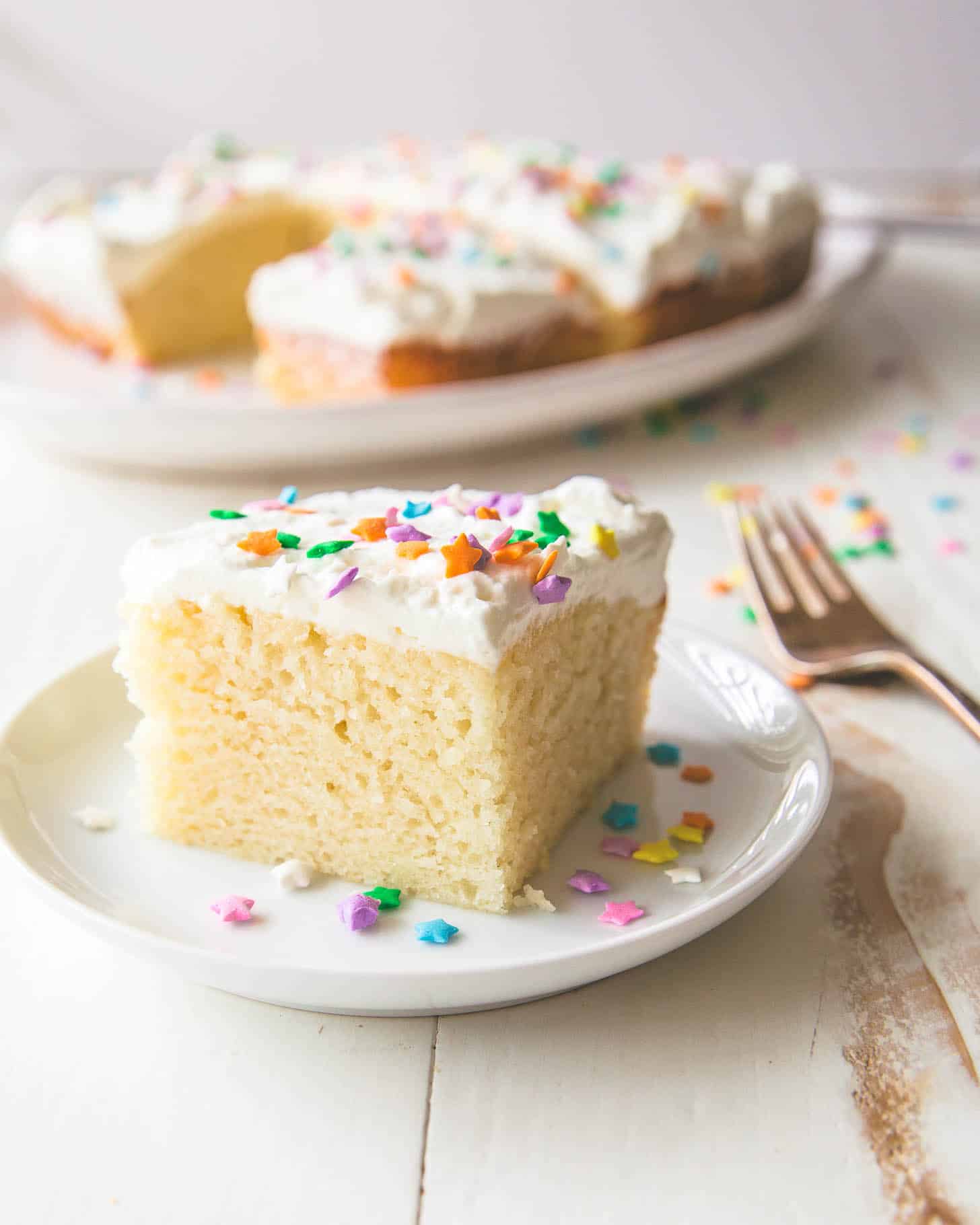
The Best moist vanilla cake recipe with oil
The best part about this recipe is how easy it is. No creaming butter and sugar, no waiting for ingredients to come to room temperature—just mix, pour, and bake. And because it’s made with oil, it’s a little lighter than traditional butter cakes, which makes it a great everyday treat. Plus, oil-based cakes tend to have a finer crumb, so every bite is soft and velvety. I also appreciate that it’s not overly sweet, so it pairs well with fresh fruit, a dusting of powdered sugar, or a simple vanilla glaze. It’s the kind of cake that disappears fast in our house, and I always end up making a second one before the first is even gone.
Ultra-Moist Vanilla Cake with Oil
A tender and fluffy vanilla cake made with oil for extra moisture. Perfect for birthdays, celebrations, or a simple sweet treat with a cup of tea or coffee.
🥘Ingredients
- 2 1/2 cups (300g) all-purpose flour
- 2 1/2 tsp baking powder
- 1/2 tsp baking soda
- 1/2 tsp salt
- 1 cup (200g) granulated sugar
- 1/2 cup (100g) light brown sugar, packed
- 3/4 cup (180ml) vegetable oil or melted coconut oil
- 3 large eggs, room temperature
- 1 tbsp pure vanilla extract
- 1 cup (240ml) whole milk, room temperature
- 1/2 cup (120ml) sour cream or plain yogurt, room temperature
- 1 cup (230g) unsalted butter, softened
- 4 cups (480g) powdered sugar
- 2 tsp pure vanilla extract
- 2-3 tbsp heavy cream or milk
👨🍳Directions
-
1
Preheat your oven to 350°F (175°C). Grease and line your cake pans with parchment paper or lightly grease with oil to prevent sticking. -
2
In a medium bowl, whisk together the flour, baking powder, baking soda, and salt. Set aside. -
3
In a large mixing bowl, combine the granulated sugar and brown sugar. Add the oil and mix until fully incorporated. -
4
Add the eggs one at a time, mixing well after each addition. Stir in the vanilla extract. -
5
In a separate bowl, combine the milk and sour cream (or yogurt). Alternate adding the dry ingredients and the milk mixture to the wet ingredients, starting and ending with the dry ingredients. Mix just until combined—do not overmix. -
6
Divide the batter evenly between the prepared cake pans. Bake for 30-35 minutes, or until a toothpick inserted into the center comes out clean. If using a 9×13-inch pan, bake for 35-40 minutes. -
7
Allow the cakes to cool in the pans for 10 minutes, then transfer them to a cooling rack to cool completely before frosting. -
8
For the vanilla buttercream (if using), beat the softened butter until creamy. Gradually add the powdered sugar, vanilla extract, and heavy cream, mixing until smooth and fluffy. Frost the cooled cake layers as desired.
🔧Equipment
- 9-inch round cake pans (2) or 9×13-inch baking pan
- Mixing bowls (2)
- Whisk
- Electric mixer or stand mixer
- Spatula
- Measuring cups and spoons
- Cooling rack
- Oven
📊Nutrition Facts (per serving)
📝Notes
Watch Video Of How Ultra-Moist Vanilla Cake with Oil Works
❓ Frequently Asked Questions About Ultra-Moist Vanilla Cake with Oil
1. Why is oil used instead of butter in this moist vanilla cake recipe?
Oil keeps the cake exceptionally moist because it remains liquid at room temperature, unlike butter which solidifies. This helps the cake stay soft and tender for days. Oil also creates a lighter crumb and enhances the vanilla flavor without adding its own taste, unlike butter which can slightly alter the flavor profile.
2. Can I substitute the oil with melted butter or another fat?
Yes, you can substitute oil with an equal amount of melted butter, but the texture will be slightly denser and less moist over time. For best results, use a neutral-flavored oil like vegetable, canola, or sunflower oil. Coconut oil (refined) can also work but may add a subtle coconut flavor. Avoid using solid fats like shortening, as they can make the cake too heavy.
3. How do I prevent the cake from becoming too dense or dry?
To avoid a dense or dry cake:
– Measure accurately: Use a kitchen scale or spoon-and-level method for flour and sugar.
– Don’t overmix: Mix the batter just until the ingredients are combined to avoid developing gluten.
– Check oven temperature: Use an oven thermometer to ensure it’s accurate (350°F/175°C is ideal).
– Don’t overbake: Start checking for doneness 5–10 minutes before the recipe’s suggested time. A toothpick should come out with a few moist crumbs, not wet batter.
4. Can I make this cake ahead of time, and how should I store it?
Yes! This cake stores well:
– Room temperature: Keep it covered in an airtight container for up to 3 days.
– Fridge: Store for up to 5 days, but bring it to room temperature before serving for the best texture.
– Freezer: Wrap slices or the whole cake tightly in plastic wrap and foil, then freeze for up to 3 months. Thaw overnight in the fridge or at room temperature before serving.
5. What’s the best way to enhance the vanilla flavor in this cake?
For a stronger vanilla taste:
– Use high-quality pure vanilla extract (not imitation) and increase it to 2 teaspoons if desired.
– Add vanilla bean paste (1–2 teaspoons) for speckles and a richer flavor.
– Infuse the oil or milk with a vanilla bean pod (split and scrape seeds into the liquid, then heat gently before cooling).
– Add a pinch of vanilla powder (½ teaspoon) for depth without extra moisture.