
queso fresco recipe

The Best queso fresco recipe
What I love most about this recipe is how easy it is to make at home. Store-bought queso fresco is fine, but when you make it yourself, you control the ingredients—no weird additives, just fresh milk, vinegar, and a little salt. Plus, it’s a great way to use up extra milk before it goes bad. It’s also lower in sodium than a lot of other cheeses, which is a bonus if you’re watching your intake. And let’s be honest, there’s nothing like the satisfaction of pulling a fresh batch out of the fridge, knowing you made it from scratch. It’s one of those small kitchen wins that makes everyday cooking feel a little more special.
Homemade Queso Fresco
A simple and delicious fresh Mexican cheese that’s perfect for crumbling over tacos, salads, or soups. This mild, slightly salty cheese is easy to make at home with just a few ingredients.
🥘Ingredients
- 1 gallon whole milk (not ultra-pasteurized)
- 1/4 cup white vinegar or lemon juice
- 1 tsp salt
👨🍳Directions
-
1
In a large pot, heat the milk over medium heat until it reaches 185°F (85°C), stirring occasionally to prevent scorching. -
2
Remove the pot from heat and slowly stir in the vinegar or lemon juice. Let it sit for 5 minutes until the milk separates into curds and whey. -
3
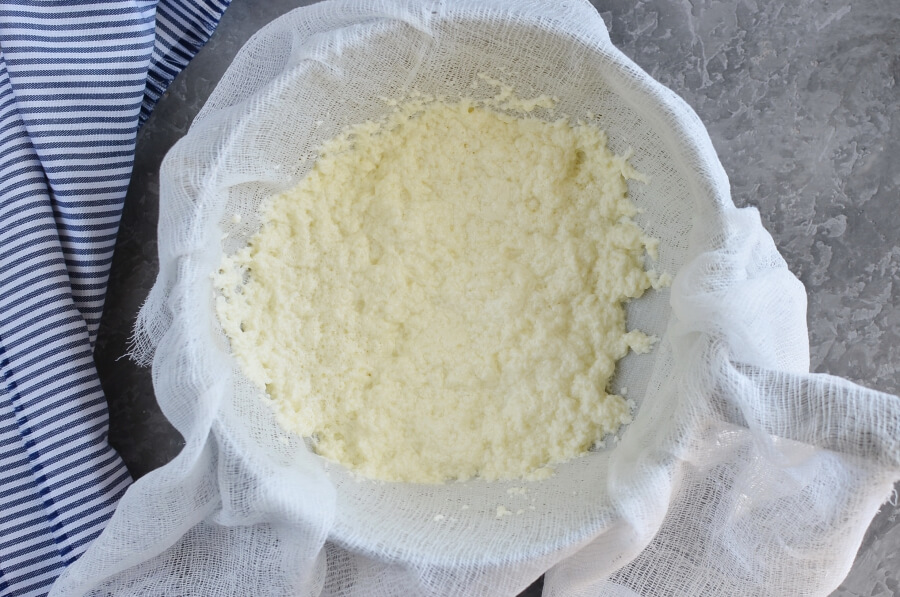
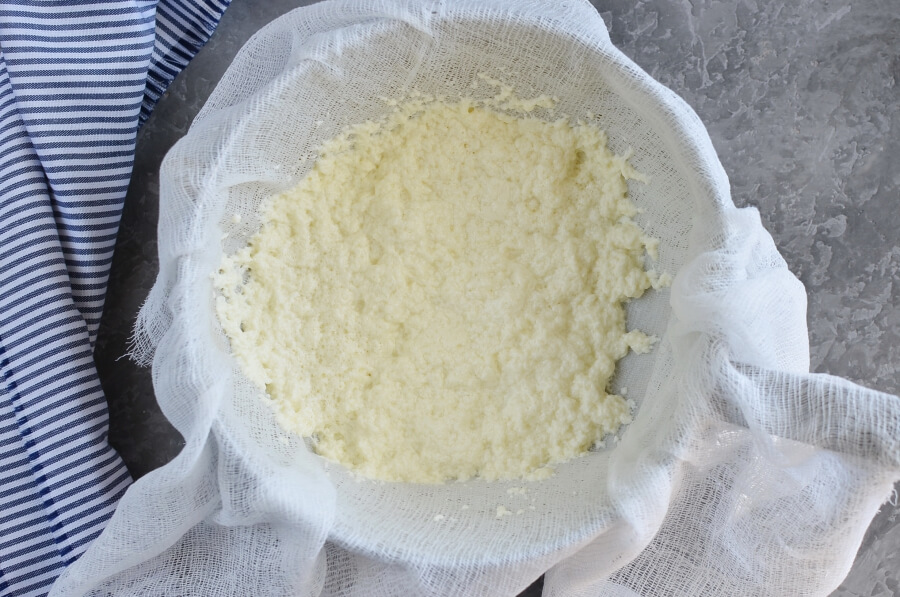
Line a colander with cheesecloth or a fine mesh strainer and place it over a large bowl. Gently pour the curds and whey into the colander to drain. -
4
Sprinkle the salt over the curds and gently mix to combine. -
5
Gather the cheesecloth around the curds and gently squeeze to remove excess whey. Shape into a disk or leave loose for crumbling. -
6
Let the cheese drain for at least 4 hours or overnight in the refrigerator for a firmer texture. -
7
Unwrap the cheese and use immediately or store in an airtight container in the refrigerator for up to 1 week.
🔧Equipment
- Large pot
- Thermometer
- Slotted spoon
- Cheesecloth or fine mesh strainer
- Colander
- Mixing bowl
📊Nutrition Facts (per serving)
📝Notes
Watch Video Of How Homemade Queso Fresco Works
❓ Frequently Asked Questions About Queso Fresco
1. What is queso fresco, and how is it different from other cheeses?
Queso fresco is a soft, crumbly, mild Mexican cheese made from cow’s milk (or a mix of cow and goat milk). Unlike aged cheeses like cheddar or cotija, it’s fresh, slightly salty, and doesn’t melt smoothly—instead, it softens when heated. It’s often used as a topping for tacos, beans, or salads rather than for melting in dishes like quesadillas.
2. Can I make queso fresco without rennet?
Yes! Traditional queso fresco uses rennet for coagulation, but you can substitute it with vinegar, lemon juice, or buttermilk for a simpler version. The texture may be slightly grainier, but it will still be crumbly and fresh. For 1 gallon of milk, use about ¼ cup of vinegar or lemon juice instead of rennet.
3. Why did my queso fresco turn out rubbery or too hard?
Overheating the milk or pressing the cheese too firmly can cause a rubbery texture. Heat the milk gently (to about 90°F/32°C) and avoid boiling. After draining, press the cheese lightly—just enough to remove excess whey but not so much that it becomes dense. Letting it drain in a colander lined with cheesecloth for 1–2 hours is usually sufficient.
4. How long does homemade queso fresco last, and how should I store it?
Homemade queso fresco lasts about 5–7 days in the refrigerator when stored in an airtight container or wrapped in parchment paper. For longer storage, you can freeze it for up to 2 months, though the texture may become slightly crumbly after thawing. Always keep it submerged in its own whey or lightly salted water to maintain freshness.
5. Can I use store-bought milk for queso fresco, or does it need to be raw?
You can use pasteurized whole milk from the store, but avoid ultra-pasteurized (UHT) milk, as it won’t coagulate properly. Raw milk works well and may yield a richer flavor, but pasteurized milk is a safe and reliable alternative. For best results, use full-fat milk (3.25% or higher) to achieve a creamier texture.